Advertorial
NATURAL WELLNESS FORMULA

Thirteen Botanicals, One Daily Serving: A Closer Look at InsuLeaf

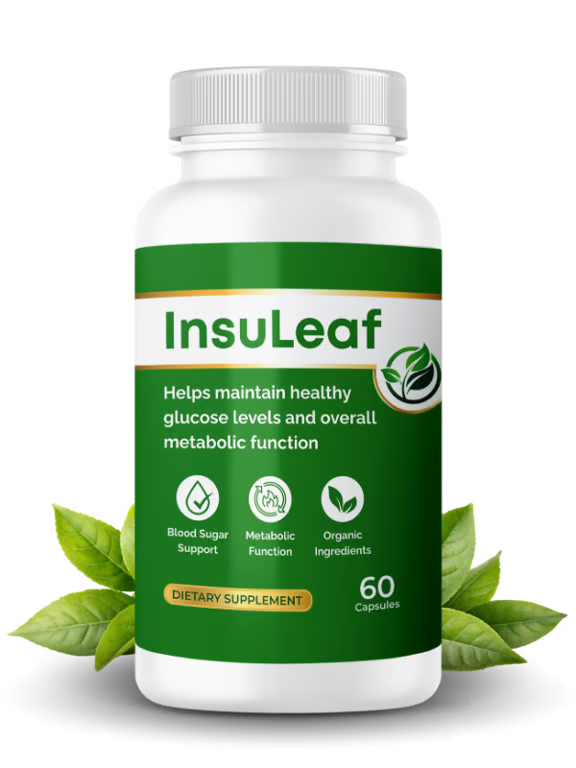
Advice about blood sugar tends to arrive as a list of subtractions — less bread, less sugar, less of whatever was enjoyable about lunch. That advice is sound as far as it goes. What gets far less attention is the additive half of the question: which ordinary foods and compounds appear, in nutritional research, to help the body do its own work more efficiently. Nuts, eggs, beets, pulses and a handful of common fruits have all been examined for exactly that. The awkward part is that eating well is necessary without always being sufficient, and the margin narrows as the years accumulate. InsuLeaf is aimed squarely at that narrowing margin — thirteen botanicals and minerals, one serving a day, intended to sit beside a sensible diet rather than excuse the absence of one, and to support blood sugar that is already sitting inside a normal range.

Check Price & Availability

Sponsored content. This page may earn a commission from purchases made through its links.

InsuLeaf dietary supplement bottle, 60 capsules

What Stands Out About the Formula

Thirteen active ingredients

Chromium, alpha lipoic acid, cinnamon bark, banaba, gymnema, bitter melon and taurine among them — a broad label rather than a single headline compound.

A routine you can actually keep

One serving, taken with a meal. Nothing to weigh, blend or schedule around, which is usually what decides whether a supplement survives past week three.

Made in the USA

Produced domestically, with the manufacturer's stated emphasis on keeping one batch consistent with the last.

The Claims, Stated Plainly

Three things, and only three. They are narrower than the category's usual marketing, and the wording is worth reading exactly as it stands.

  • Support for blood sugar balance that is already within a normal range
  • Support for the ordinary business of carbohydrate metabolism, day to day
  • General wellness, and antioxidant defence as part of it

Where a Daily Serving Actually Goes

Three stages, following the capsule from the meal it is taken with.

1
During digestion

Chromium and berberine are active in the window when a meal is being broken down and its carbohydrates converted into glucose the body can use.

2
Across the day

Cinnamon bark and gymnema sylvestre are the steadier contributors, intended to support metabolic balance between meals rather than at a single moment.

3
Over the longer term

Alpha lipoic acid and taurine work on the slower question — oxidative stress, and the cell-level wear that metabolic health depends on across years rather than hours.

Four Months In: One Reader's Account

The afternoons were what Margaret noticed first, some time after she turned 55. “Nothing unusual for lunch, and then two o'clock would arrive and I'd be finished for the day,” she says. Her fasting glucose was still comfortably inside the normal range when her doctor checked it. What caught her attention was the direction of travel across a few years of results — not a problem, but not nothing either.

Her instinct was to add rather than overhaul. The half-hour walk was already a habit and she had been paying attention to carbohydrates for a while; she wanted something that complemented both instead of replacing them. InsuLeaf turned up while she was reading around the subject.

“The label was the deciding factor,” she says. “Cinnamon, chromium, berberine — I could go and find the studies without taking anyone's word for it.” It became part of breakfast.

By around the six-week mark the afternoons felt less like a cliff edge. She is careful about how she puts it. “It isn't magic, and I'd be suspicious of anyone who said it was. I'm still walking and still watching what I eat. It's one part of a routine that happens to be working.” Her most recent appointment turned up nothing her doctor was unhappy with.

The Label, Ingredient by Ingredient

Each of these was picked against published nutritional research. The eight below are the ones doing most of the work; every study referenced is listed in full at the foot of the page so you can read it rather than take our word for it.

Cinnamon Bark Extract

In traditional use for centuries, and one of the more heavily trialled ingredients here. Studies have looked at its effect on glucose metabolism and on blood lipids. [1]

Chromium

A trace mineral the body genuinely requires, with an established part in insulin signalling and in processing carbohydrate. It appears on most serious formulas in this category. [3]

Berberine

A plant compound found across several unrelated species, and among the most examined in this field. Research has explored its role in supporting healthy blood sugar and cholesterol. [2]

Alpha Lipoic Acid (ALA)

Soluble in both water and fat, which is unusual and useful — it means the antioxidant reaches tissue that most others cannot. [4]

Gymnema Sylvestre

The Ayurvedic name translates roughly as “sugar destroyer”. Research has focused on two things: sugar cravings, and glucose metabolism. [5]

Bitter Melon (Momordica charantia)

A tropical fruit with a long history in traditional medicine. Interest centres on compounds within it that behave, in some respects, like insulin. [6]

Taurine

An amino acid already produced in the body. It supports antioxidant defence, and has a research literature of its own around metabolic health. [7]

Banaba Leaf Extract

Included for corosolic acid, which has been studied for its potential role in moving glucose into cells where it can be used. [8]

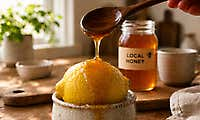
A jar of local raw honey being poured on a kitchen table

🍯 Honey (Raw Honey)

Honey is the inclusion that surprises people, given the subject. The distinction the formula rests on is between raw honey and refined sugar: the raw form carries enzymes, antioxidants and trace minerals that processing strips out, and those components are the reason it behaves differently. Researchers have compared its glycaemic response with that of other sweeteners, and have looked separately at its antioxidant activity in the context of metabolic health. Neither line of work makes honey a health food, and nobody sensible claims otherwise. It earns its place here as a considered choice rather than an obvious one.

Questions Worth Answering Before You Start

When in the day should it be taken?

One serving a day, alongside food. Most people attach it to breakfast for the simple reason that breakfast is hard to forget. Whatever the bottle in front of you says takes precedence over anything written here.

How quickly would anything be noticeable?

There is no honest single answer. Some people mention something within a few weeks; plenty of others say two or three steady months gave them a clearer sense of it. What you eat and how much you move will still account for more than any capsule does.

Can it be taken alongside prescription medication?

Ask a pharmacist or your doctor before you start, and be specific about what you already take. This matters most if anything on your list is prescribed for blood sugar, because several of the botanicals in this category are studied precisely for their effect on it.

What about side effects?

Most people report nothing of note. A minority describe mild digestive settling during the first week, which is common when anything new joins a routine. Anything beyond that is a reason to stop and get medical advice rather than wait it out.

How do returns work?

Not through this website. Orders, delivery, guarantees and refunds all sit with the seller, and the current terms are published on the official sales page. Read them before you pay rather than afterwards.

Who wrote this page, and are they paid?

Health Story LLC, in Chicago, and yes. This is a paid advertorial and the product links earn us a commission. We have no hand in making, selling or shipping InsuLeaf — our Advertising Disclaimer sets out the arrangement in full.

Research Cited on This Page

  1. Cinnamon improves glucose and lipids of people with type 2 diabetes
    https://pubmed.ncbi.nlm.nih.gov/14633804/
  2. Efficacy of berberine in patients with type 2 diabetes mellitus
    https://pubmed.ncbi.nlm.nih.gov/18442638/
  3. Effect of chromium supplementation on blood glucose and lipid levels in patients with type 2 diabetes mellitus
    https://pubmed.ncbi.nlm.nih.gov/33783683/
  4. Alpha-lipoic acid as a dietary supplement: molecular mechanisms and therapeutic potential
    https://pubmed.ncbi.nlm.nih.gov/19664690/
  5. A systematic review of Gymnema sylvestre in obesity and diabetes management
    https://pubmed.ncbi.nlm.nih.gov/24166097/
  6. Hypoglycemic efficacy and safety of Momordica charantia (bitter melon) in patients with type 2 diabetes mellitus
    https://pubmed.ncbi.nlm.nih.gov/32951763/
  7. The potential role of taurine in diabetes and its complications
    https://pubmed.ncbi.nlm.nih.gov/22826569/
  8. Antidiabetic activity of corosolic acid from Lagerstroemia speciosa (Banaba) in genetically diabetic KK-Ay mice
    https://pubmed.ncbi.nlm.nih.gov/10189055/

One caveat that belongs with any list like this: every study above examines a single ingredient, not the finished product. Research on cinnamon is research on cinnamon. It is offered so you can look at the underlying evidence yourself, not as proof of what a particular formula will do.

See Current Packages and Pricing

Bundle options, whatever promotion is running, and the full terms of sale are all published on the official checkout page.

Go to Official Sales Page

This page is a paid advertorial published by health-story.com. It is promotional in nature and is neither independent journalism nor medical advice. The product links are affiliate links and we may be compensated on purchases made through them. See our Advertising Disclaimer and Privacy Policy.